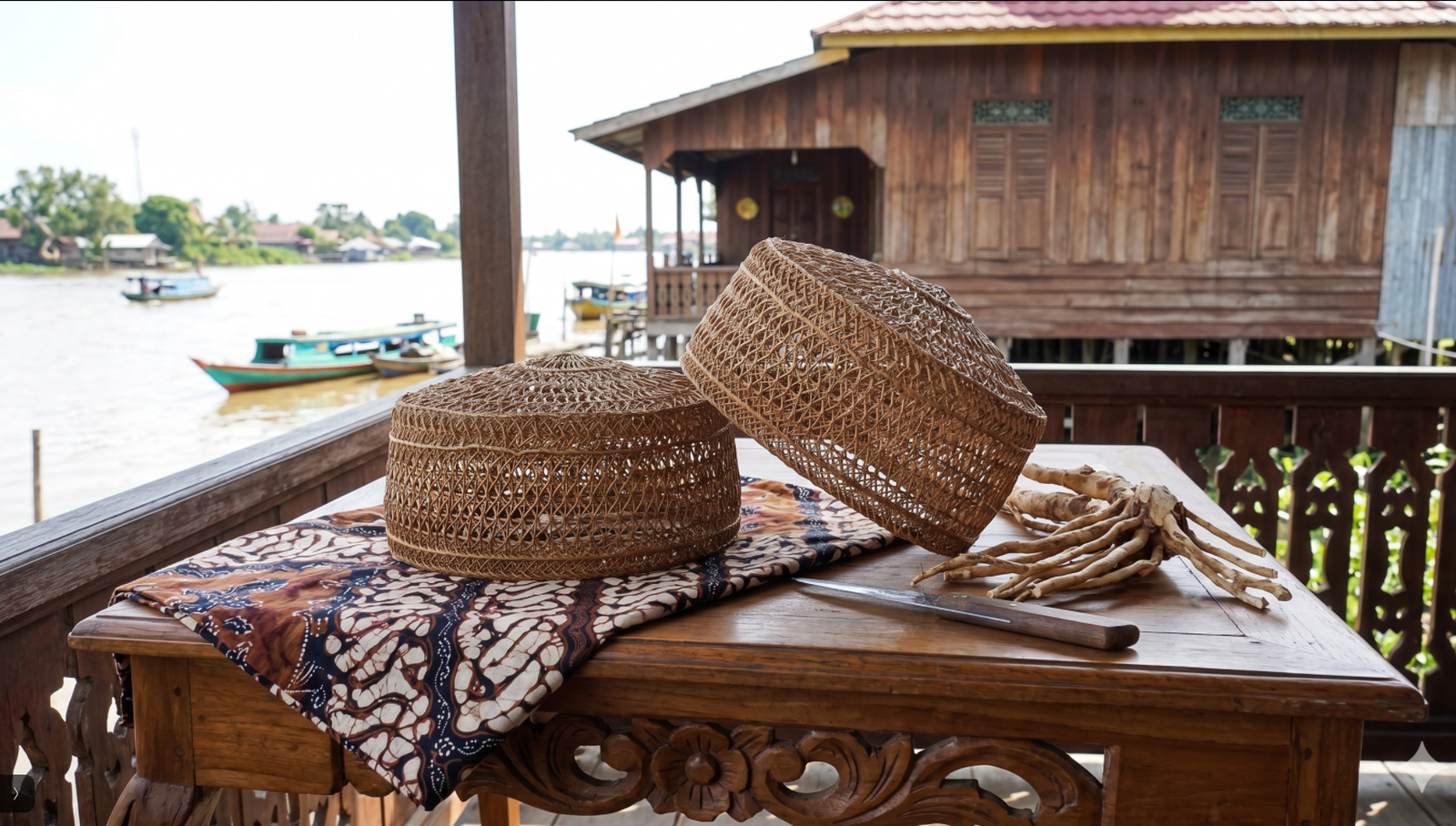
The Origins of Kopiah Jangang
The Origins of Kopiah Jangang: Historical Traces from the Banks of Margasari
The existence of the Kopiah Jangang is inseparable from the landscape and the historical pulse of the Banjar civilization in South Kalimantan. According to local oral history and cultural records, the craft of weaving jangang roots is centered in the Margasari region, which is currently part of the Tapin Regency.
The genesis of this unique headwear emerged from the local wisdom of inland communities living alongside the tropical rainforests. In ancient times, locals harvested wild climbing plants that thrived in the swamps and forests of Kalimantan to satisfy daily needs, such as crafting containers and fasteners. This resourcefulness eventually evolved into the sophisticated art of weaving highly aesthetic headwear.
1. A Symbol of Identity and Social Status in the Sultanate Era
During the golden age of the Banjar Sultanate, the Kopiah Jangang was far more than a simple sun shield. This root-woven cap transformed into a symbol of modesty, religiosity, and social stature. Village elders, religious leaders, and nobles of the Sultanate regularly wore these caps during traditional ceremonies and crucial assemblies to project authority and high dignity.
2. A Craft Passed Down Through Generations
The skill required to select, shave, and intricately weave jangang roots into a precise songkok is not something learned through formal schooling. For centuries, the secrets behind these complex weaving patterns have been closely guarded and passed down across generations within artisan families in Margasari. Crafting a single, entirely handmade kopiah can take anywhere from weeks to months, strictly depending on the density and tightness of the weave.
Traditional Historical Value: To this day, the manufacturing process of the Kopiah Jangang strictly preserves ancestral methods without any modern machinery. Every needle piercing and tug of the root fiber embodies the perseverance, patience, and deep dedication of Banjar artisans in safeguarding their heritage.
Share article: